October 10, 2026
•
10 min
read
Developing a variety is a genuine challenge: understanding and anticipating the needs of farmers and consumers, complying with existing standards and anticipating future changes, adapting to market demands, etc. Variety development processes are also costly and, depending on the crop species, can take several years. In the face of climate change, variety development is now facing new challenges.
First, current and future climates are putting existing varieties under severe pressure. Some are no longer suited to today’s climatic conditions or rely on farming practices that are becoming incompatible with climate change, such as flax in northern France (Hue et al., 2025).
Second, by the time a variety reaches the market, the climatic conditions in its target environments may have changed substantially from those prevailing when its development began (Whitfield et al., 2021).
Finally, current variety selection criteria are being challenged by the growing need to place the determinants of plant resistance or adaptability to climate variability at the heart of breeding programs (Langridge et al., 2021).
In response to these challenges, the historical model of variety development must evolve. Rather than simply measuring the performance of a variety, the goal is now to assess the full range of conditions in which that variety can be used (Kusmec et al., 2021).
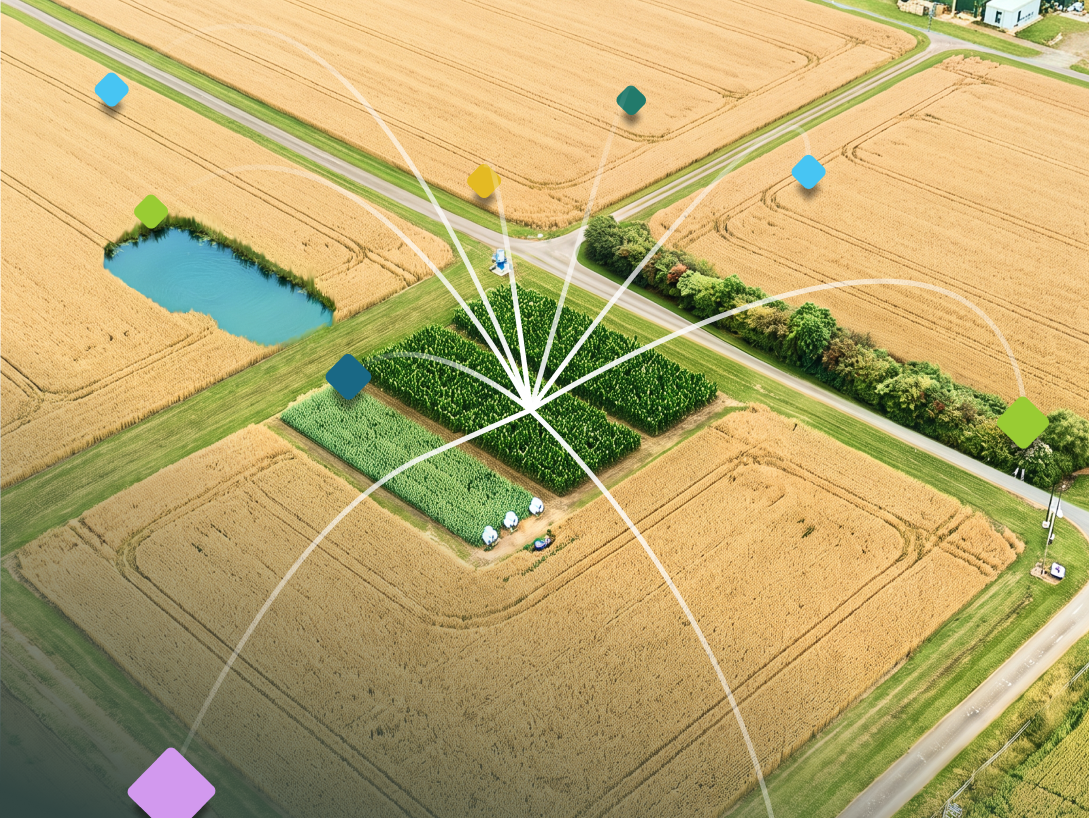
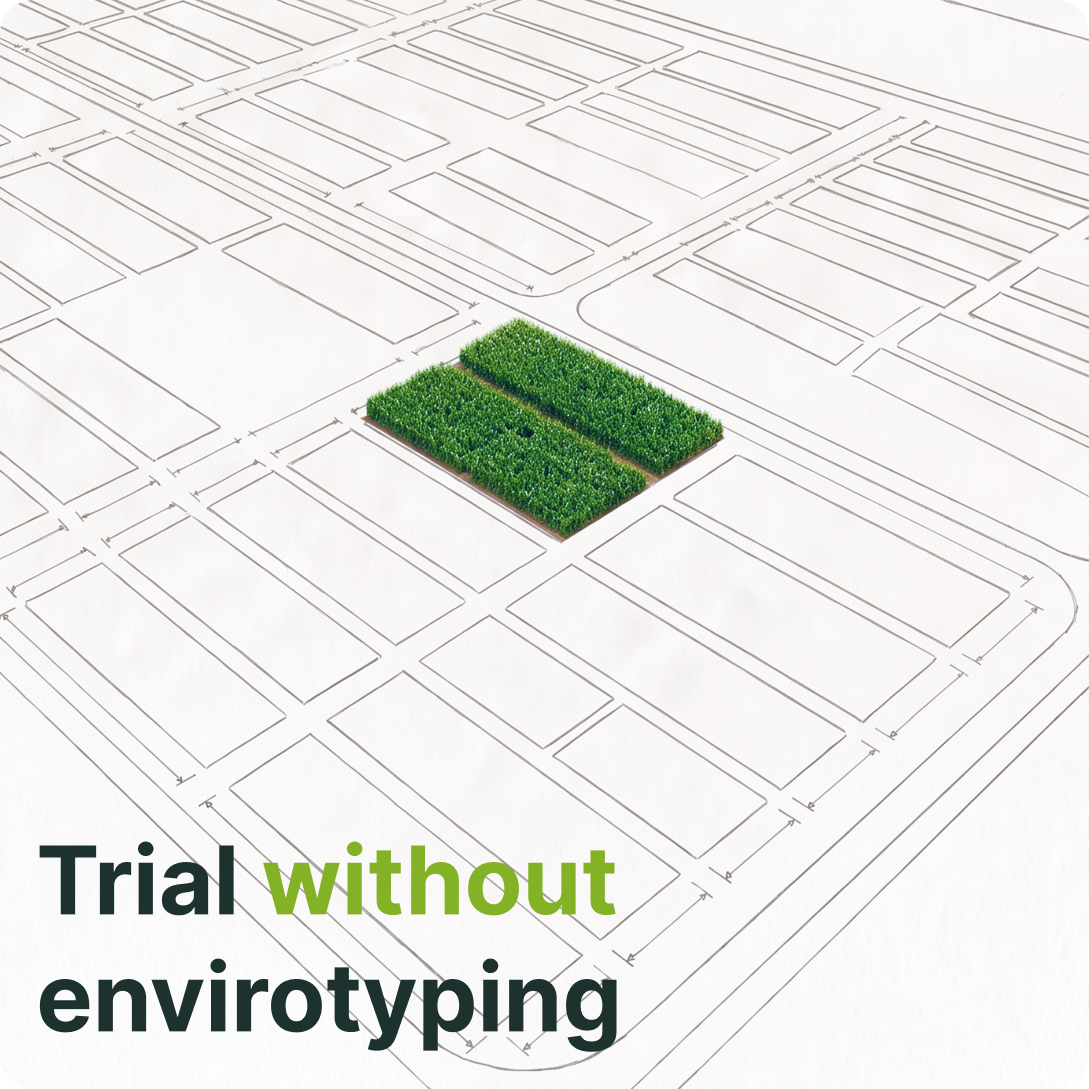
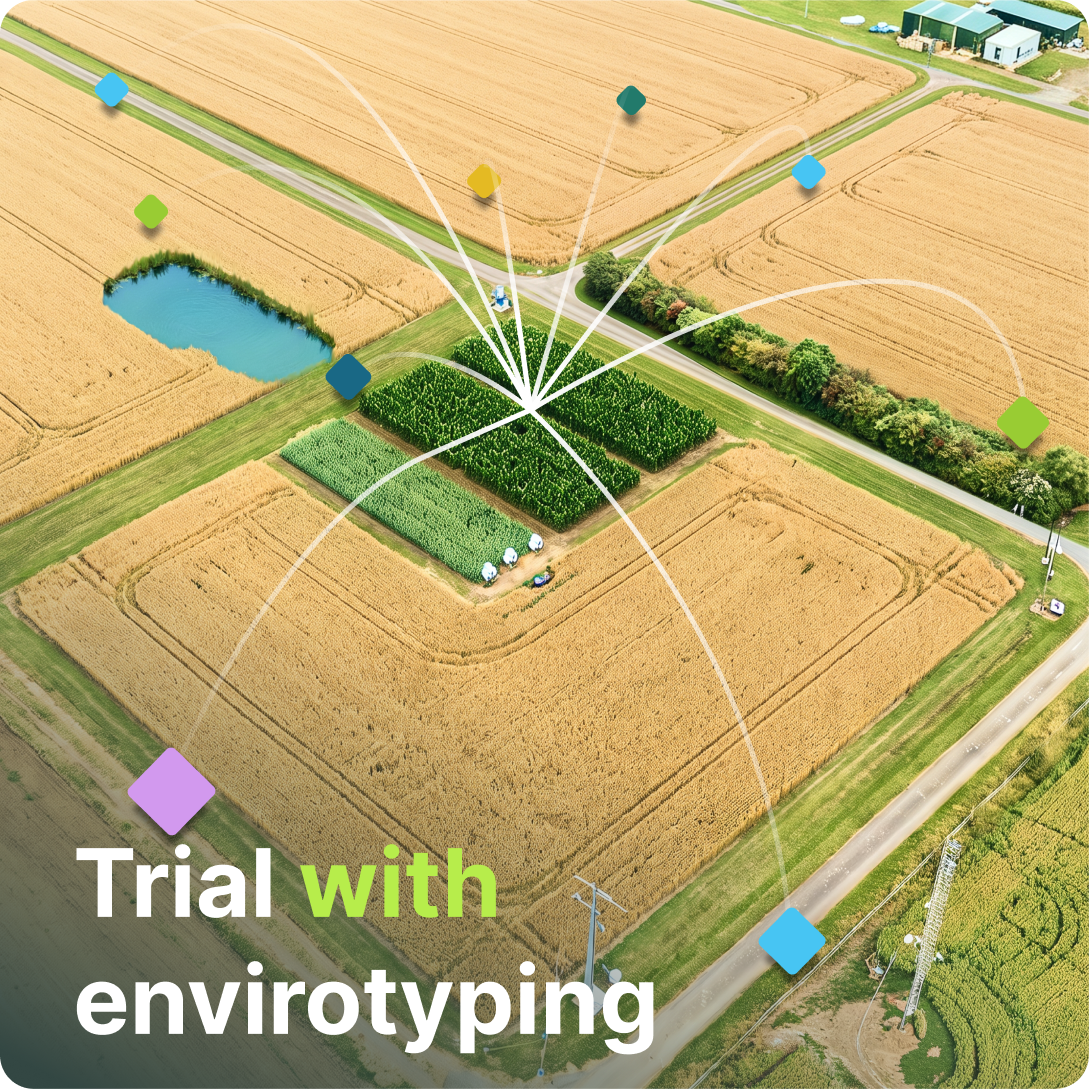
This paradigm shift requires us to pay close attention to the conditions in which varieties will be used, in order to understand them, better target agronomic zones and markets, and provide farmers with recommendations for their use. This is precisely where envirotyping can play a key role. Envirotyping aims to measure the parameters that describe the context in which a variety is used. It therefore lies at the heart of the issues raised by the challenges of climate change.
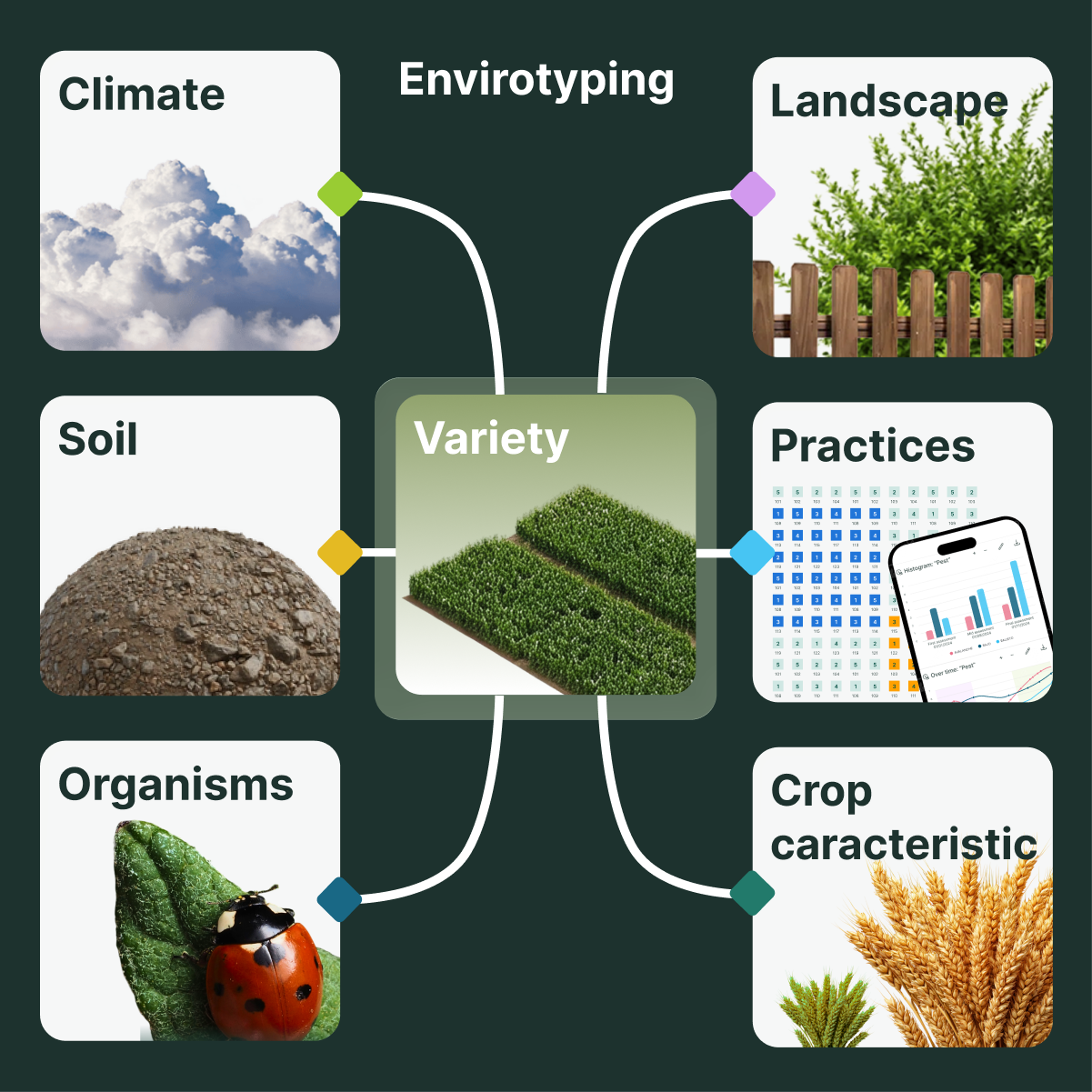
Xu (2016) defines envirotyping as follows: “All environmental factors that affect plant growth and yield can be defined as envirotypes (environment + types). The process for determination and measurement of all the environmental factors is called envirotyping.” Envirotyping refers to understanding the interactions between the plant, its environment, and the management practices used. These interactions are often synthetized using the following formula: G × E × M, where “G” refers to genotype, “E” to environment, and “M” to farming practices and crop management methods.
To characterize these factors effectively, envirotyping must take the following components into account:
One component of envirotyping that is too often overlooked is the crop management practices with which the variety is used, and above all, their interactions with the other environmental components.
A variety is developed to maximize one or a limited number of criteria (yield, protein content, size, etc.) within a market that is more or less geographically defined. This geographical scope includes environments that may vary to different degrees, but within the target market, the farmers who use the developed variety may implement a highly diverse range of practices that can, by themselves, largely determine the performance of that variety (Cooper et al., 2001, 2010). Evans et al. (2020) showed that 32% of yield variability in 748 wheat variety trials was explained by farming practices. The practices identified as decisive were water regime (irrigated or not), sowing dates, and fungicide application.
Nevertheless, crop management practices remain insufficiently considered and, above all, are rarely examined in relation to environmental factors (Cooper et al., 2020; Gauffreteau et al., 2014).
An increasing amount of data on variety performance and behavior under real-world farming conditions is becoming available, particularly in the context of growing interest in systems-based agronomy, as reflected in the development of on-farm experimentation networks such as the DEPHY network (Ecophytopic, 2020). However, these data may lack contextual elements that would allow them to be analyzed in interaction with the other components of envirotyping (landscape, climate, soil, etc.). Even so, they can help identify practices or combinations of practices that have a significant effect on variety performance and that variety developers must then investigate in greater depth.
Variety registration trials also generate large quantities of data including information on the context, but these data are currently not valued at their full potential. With envirotyping, these data could be leveraged beyond their first purpose of variety registration.
Integrating crop management into the variety development process makes it possible to precisely identify the factors (M) that affect variety performance. This integration relies on collecting information on crop management (fertilization regime, tillage, irrigation, preceding crops, etc.) at the appropriate level of granularity and enriched with the contextual information needed to study interactions with the other components of envirotyping.
This calls for a redesign of both variety development processes and the experimental systems most commonly used. To account for the interactions between factors (M) and (E), systems-based experimentation is for example particularly relevant (Havard et al., 2017).
A better understanding of the (M) component of envirotyping would increase the field performance of developed varieties in two complementary ways.
First, varieties would be developed by more closely taking into account the practices usually implemented by the target farmers.
Second, their release to the market could be accompanied by recommendations on the crop management systems under which they are best suited. These recommendations would complement those already provided for the (E) component. The question related to using a variety would therefore shift from: In what context should I use my variety? to: In what combination of context and with which crop management practices should I use my variety?
For these reasons, most plant breeding organizations are expanding their activities beyond seed sales to include agronomic innovation. They thus offer integrated solutions including guidance on the best management practices aimed at maximizing genetic performance. In that context, it becomes paramount to integrate an advanced agronomic trial management system, such as the one developed by Doriane - Bloomeo Agro Testing - Analyze your varieties, inputs and methods – built on a plant breeding data management platform. To learn more on our data management platform Bloomeo, read or latest article on Digital Transformation in Plant Breeding: 40 Years of Innovation in Software and Science.
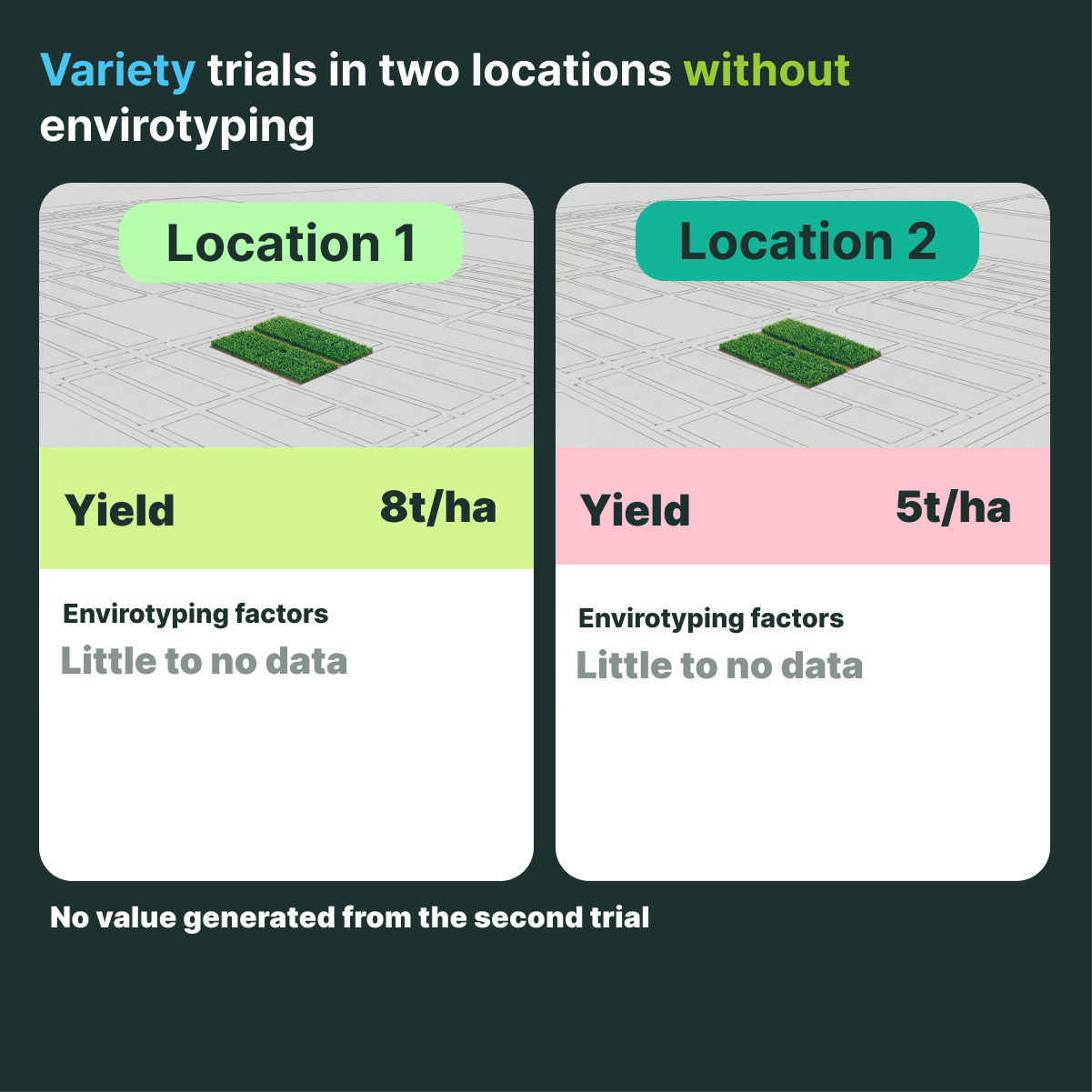
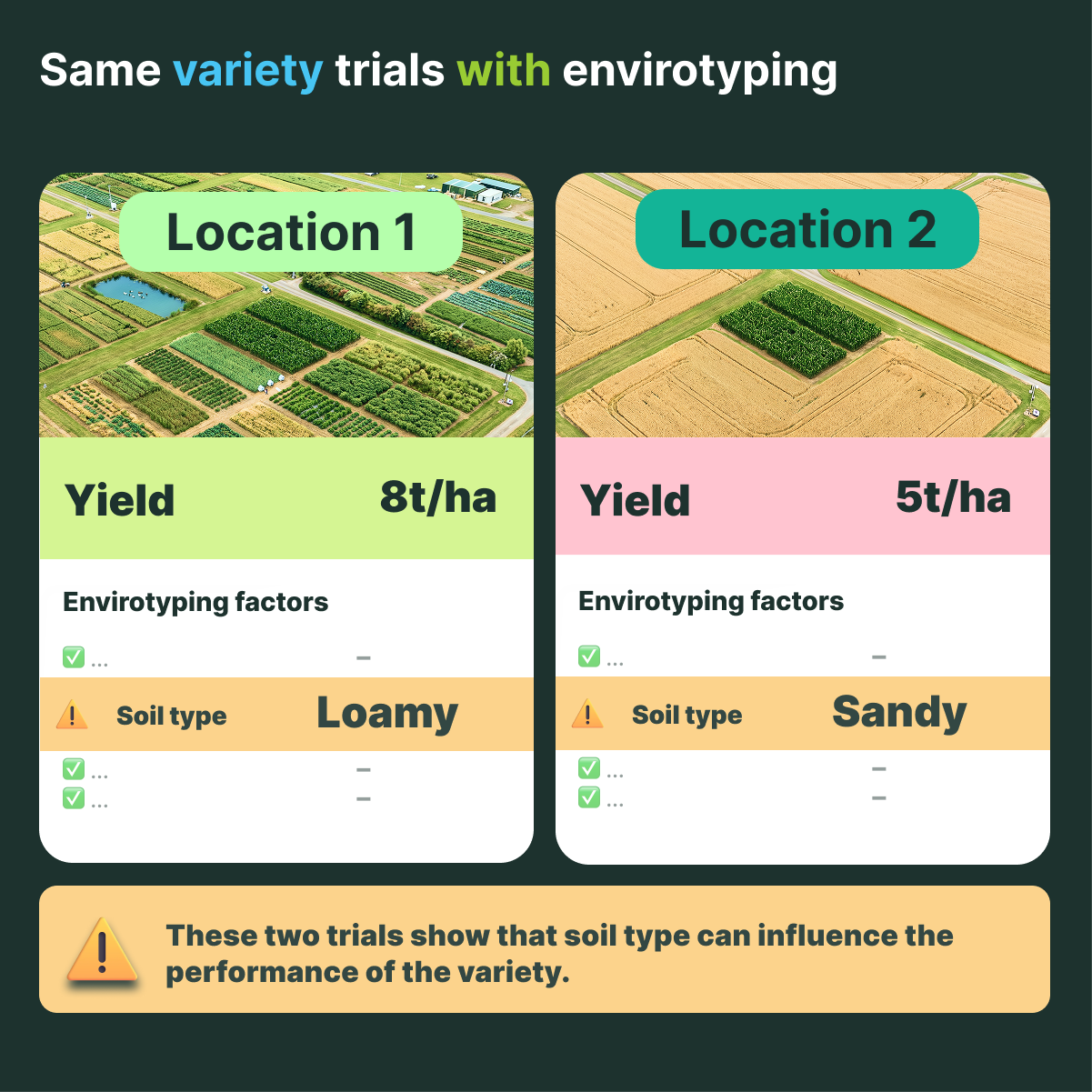
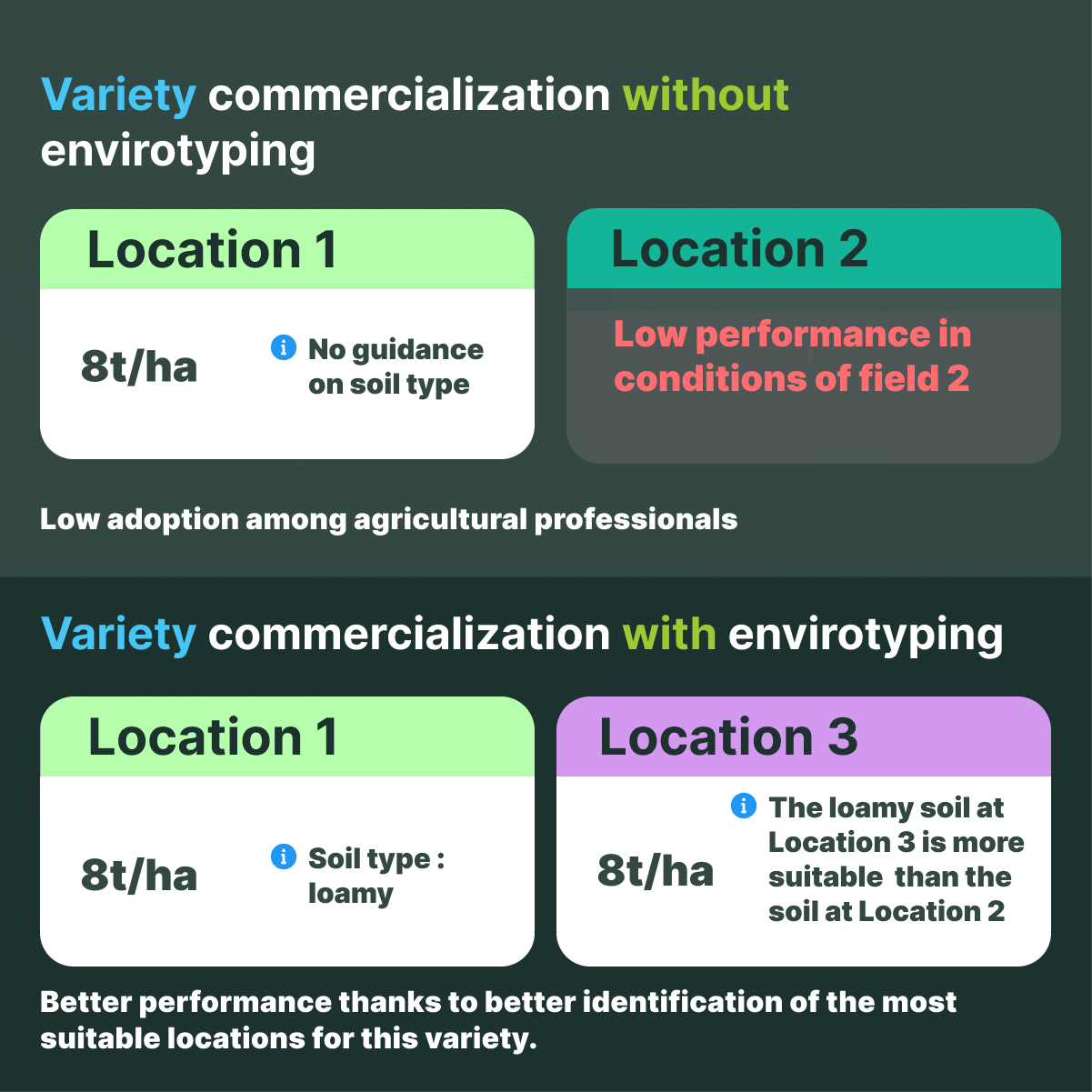
Production environments are now subject to increasingly variable climatic conditions (Holleman et al., 2019). Historical climate benchmarks are being disrupted: the last frost days in spring and the first frost days in autumn are shifting, drought events are appearing outside the summer period, etc. (Touzé et al., 2026; Spinoni et al., 2017). These disruptions make it necessary to deepen our understanding of the conditions in which newly developed varieties can be grown, in order to ensure that they match these new climatic parameters.
Better characterizing the climatic conditions under which varieties are cultivated requires both improving the quality of the climate data collected and considering variety performance as a range rather than as an average.
The climate data needed to characterize climatic conditions and their variability must be:
In the face of climate variability, a variety must now perform well across a range of climatic conditions. Its development should therefore be designed by measuring the set of climatic conditions in which it will be effective, rather than by evaluating its average performance. This set of conditions can be called the performance range, as opposed to average performance. When integrated from the beginning of variety development, this concept makes it possible to identify all the conditions in which the variety will perform well and to understand how its performance varies within that performance domain. For example, a variety may develop optimally under certain conditions while tolerating others. Even if it is optimized for specific conditions, it is becoming essential to know under which conditions it can also be cultivated.
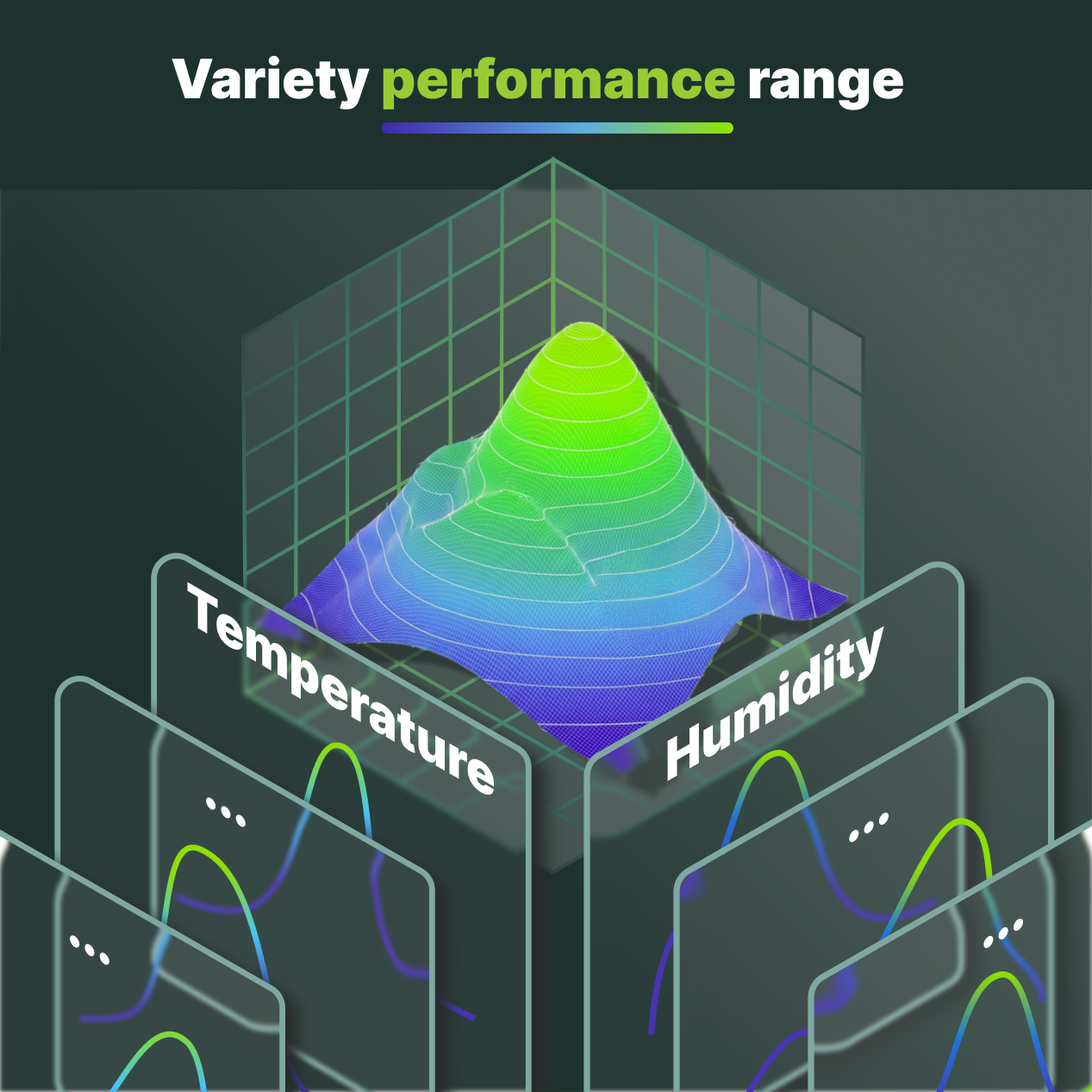
Such strategies require contextualized pedo-climatic data to be processed by multivariant clustering analytical tools in a plant breeding data management platform. Such platforms offer valuable opportunities to build target environment profiles and shape variety performance ranges (See our latest article on Doriane's Blog: Digital Transformation in Plant Breeding: 40 Years of Innovation in Software and Science).
Developing varieties can sometimes take several years. The climate prevailing when a new variety is commercialized may therefore differ considerably from the current climate and from the conditions prevailing at the experimental stations where the varieties are developed.
Envirotyping makes it possible to anticipate the climates in which future varieties will develop. It enables detailed characterization of current climates and the identification of areas that are already subject to hotter and drier climates today, similar to those that currently temperate areas will experience tomorrow.
The data collected can also feed algorithms designed to predict the climatic characteristics of agronomic zones, forecast the behavior of varieties under future climates, and develop adapted varieties.
All climate data collected through envirotyping make it possible to build an accurate picture of the climatic conditions experienced by crops as they are grown today and as they have been grown so far. By combining envirotyping data with climate projections, it becomes possible to anticipate more precisely the climatic conditions that crops will face in 5, 10, or 15 years.
By allowing the identification of areas where current climatic conditions are similar to those that a more northern area will experience under future climates, it is possible to simulate the effect of climate change on current varieties by growing them in these areas. This approach is already being used for certain tree species involved in reforestation (Grady et al., 2011).
Knowing which climatic conditions future varieties will have to face makes it easier to take them into account from the very beginning of the development process, for example when choosing parent lines, and therefore to avoid developing varieties that perform well in the current climate but will already be less adapted to the climate prevailing at the time they are commercialized.
The previous sections show that envirotyping requires the collection of numerous data points, sometimes at a fine scale, followed by their analysis and the intelligible presentation of the findings. This data management challenge partly explains why some stakeholders have fallen behind in envirotyping. In this respect, AI represents a useful advance for envirotyping as it can help all along the data management process.
AI can first facilitate and optimize the collection of envirotyping data. Envirotyping involves collecting large amounts of data, often through localized measurement methods, such as weather stations installed directly within experimental plots. When combined with these measurement systems, AI can, for example, help to:
Once the data has been collected, AI can help to clean it and improve its usability by identifying outliers. For example, several algorithms which use can be simplified using AI can detect and correct outliers automatically:
Other methods can then be used to estimate missing data:
The data collected, enriched, or corrected when necessary, can then be analyzed using AI.
The relationships between the environmental factors that explain variety performance are complex: effects may be nonlinear, interactions between factors must be considered, and the data may not meet statistical assumptions, even after outlier correction. Deep learning and machine learning models such as random forests and neural networks are therefore particularly relevant in this respect, because they can account for multiple interactions between explanatory factors (Ahmed et al., 2023), and because they are not sensitive to nonlinear effects and do not require the data to meet normality or homoscedasticity criteria as linear models do. Those models are complex and require advanced statistical expertise to be handled efficiently. AI can help to better use these models and therefore enrich the data analysis of envirotyping data.
Finally, AI can optimize the understanding of the results generated by data analyses.
AI can facilitate the choice of the most relevant chart to represent a phenomenon by automatically suggesting appropriate visualizations. It can then help simplify charts when they show complex phenomena and personalize them according to the viewer’s needs. For example, visualizations can be generated on demand through an interface connected to an AI model capable of understanding natural language.
Lastly, AI facilitates the structuring of these results in the form of reports and makes it possible to explain them in textual form.

We have seen that envirotyping requires rethinking the process of collecting, storing, and analyzing data. In addition to requiring knowledge that may sometimes be difficult to access, this evolution requires building a data infrastructure capable of hosting the necessary volumes of data and all the corresponding metadata.
The challenge is therefore as much agronomic as it is technical and computational: collecting the right information, at the right scale, at the right time, and at the right frequency, then being able to aggregate it at the scale of the analysis and derive an experimental result on which a decision can be based.
It is to address this challenge that Doriane develops Bloomeo, where precise geolocation of trial environments, management of multifactorial experiments, and integration of pedoclimatic data and farming practices constitute a first step of further developments. Doriane invests in a large Tech and Data team including data scientists and PhDs, in order to develop solutions that can be adopted by a larger number of plant breeding organizations regardless of their maturity and available resources.
Ahmed, S. F., Alam, M. S. B., Hassan, M., et al. (2023). Deep learning modelling techniques: Current progress, applications, advantages, and challenges. Artificial Intelligence Review, 56, 13521–13617. https://doi.org/10.1007/s10462-023-10466-8
Adesh, A., Shobha, G., Shetty, J., & Xu, L. (2024). Local outlier factor for anomaly detection in HPCC systems. Journal of Parallel and Distributed Computing, 192, 104923. https://doi.org/10.1016/j.jpdc.2024.104923
Bicard, M., Faucon, M.-P., Dockter, C., Vequaud, D., Pin, P. A., Rincent, R., Elmerich, C., & Lange, B. (2025). Envirotyping to drive spring barley adaptation in Northwestern Europe. Field Crops Research, 326, 109793. https://doi.org/10.1016/j.fcr.2025.109793
Cooper, M., Woodruff, D. R., Phillips, I. G., Basford, K. E., & Gilmour, A. R. (2001). Genotype-by-management interactions for grain yield and grain protein concentration of wheat. Field Crops Research, 69(1), 47–67. https://doi.org/10.1016/S0378-4290(00)00131-3
Cooper, M., Messina, C. D., Podlich, D. W., Totir, L. R., Baum, M., Hausmann, N. J., Wright, D., & Graham, G. (2010). Increasing productivity by matching farming system management and genotype in water-limited environments. Journal of Experimental Botany, 61, 4129–4142.
Cooper, M., Messina, C. D., Podlich, D. W., Totir, L. R., Baum, M., Hausmann, N. J., Wright, D., & Graham, G. (2020). Integrating genetic gain and gap analysis to predict improvements in crop productivity. Crop Science, 60, 2139–2150.
CTPS. (2022). Comment prendre en compte l’adaptation au changement climatique lors de l’inscription des variétés au Catalogue officiel ? Rapport du Comité scientifique du CTPS. Ministère de l’Agriculture et de la Souveraineté alimentaire.
Ecophytopic. (2020). Qu’est-ce que le réseau DEPHY ? Ministère de l’Agriculture et de la Souveraineté alimentaire.
Evans, J. R., et al. (2020). Exploring long-term variety performance trials to improve environment-specific genotype × management recommendations: A case study for winter wheat. Field Crops Research, 255, 107848.
Gauffreteau, A., Charmet, G., Jeuffroy, M.-H., Le Gouis, J., Meynard, J.-M., & Rolland, B. (2014). Variétés et itinéraires techniques du blé : une évolution vers la diversification. Agronomie, Environnement & Sociétés, 4(2), 13–22.
Grady, K. C., Ikeda, D. H., & Whitham, T. G. (2011). The ups and downs of climate change: Using natural gradients to predict responses of trees to future climates.
Havard, M., et al. (2017). Guide de l'expérimentateur système : concevoir, conduire et valoriser une expérimentation “système” pour les cultures assolées et pérennes. GIS PIClég, GIS Fruits, Réseau ECOVITI, RMT Systèmes de culture innovants, GIS Relance Agronomique, 172 p.
Holleman, C., Rembold, F., Crespo, O., & Conti, V. (2019). The impact of climate variability and extremes on agriculture and food security: An analysis of the evidence and case studies. FAO Agricultural Development Economics Technical Study No. 4. FAO.
Hue, A.; Buffet, C.; Brionne, L.; Beaugrand, J.; D’Arras, P.; Bourmaud, A.; Baley, C. Adapting Flax Production to Climate Change: Can a Spring Variety Be Grown in Winter? Fibers 2026, 14, 2. https://doi.org/10.3390/fib14010002
Keller, M. (2010). Managing grapevines to optimise fruit development in a challenging environment: A climate change primer for viticulturists. Australian Journal of Grape and Wine Research, 16(s1), 56–69. https://doi.org/10.1111/j.1755-0238.2009.00077.x
Kusmec, A., Zheng, Z., Archontoulis, S., Ganapathysubramanian, B., Hu, G., Wang, L., Yu, J., & Schnable, P. S. (2021). Interdisciplinary strategies to enable data-driven plant breeding in a changing climate. One Earth, 4(3), 372–383. https://doi.org/10.1016/j.oneear.2021.02.005
Langridge, P., Braun, H., Hulke, B., Ober, E., & Prasanna, B. M. (2021). Breeding crops for climate resilience. Theoretical and Applied Genetics, 134(6), 1607–1611. https://doi.org/10.1007/s00122-021-03854-7
Li, Q., Li, R., Ji, K., & Dai, W. (2015). Kalman filter and its application. In 2015 8th International Conference on Intelligent Networks and Intelligent Systems (ICINIS) (pp. 74–77). https://doi.org/10.1109/ICINIS.2015.35
Liu, F. T., Ting, K. M., & Zhou, Z.-H. (2008). Isolation forest. In 2008 Eighth IEEE International Conference on Data Mining (pp. 413–422). https://doi.org/10.1109/ICDM.2008.17
Martre, P., et al. (2022). Prediction of near-term climate change impacts on UK wheat quality and the potential for adaptation through plant breeding. Global Change Biology.
Murti, D. M. P., Pujianto, U., Wibawa, A. P., & Akbar, M. I. (2019). K-nearest neighbor (K-NN) based missing data imputation. In 2019 5th International Conference on Science in Information Technology (ICSITech) (pp. 83–88). https://doi.org/10.1109/ICSITech46713.2019.8987530
Neloy, A. A., & Turgeon, M. (2024). A comprehensive study of auto-encoders for anomaly detection: Efficiency and trade-offs. Machine Learning with Applications, 17, 100572. https://doi.org/10.1016/j.mlwa.2024.100572
Nandillon, R., Guinet, M., & Munier-Jolain, N. (2024). Crop management strategy redesign enables a reduction in reliance on pesticides: A diachronic approach based on a diversity of French commercial farms. Agriculture, Ecosystems & Environment, 366, 108949. https://doi.org/10.1016/j.agee.2024.108949
Resende, R. T., Chenu, K., Rasmussen, S. K., Heinemann, A. B., & Fritsche-Neto, R. (2022). Editorial: Enviromics in plant breeding. Frontiers in Plant Science, 13, 935380. https://doi.org/10.3389/fpls.2022.935380
Spinoni, J., Naumann, G., Vogt, J. V., & Barbosa, P. (2017). Pan-European seasonal trends and recent changes of drought frequency and severity. Global and Planetary Change, 148, 113–130. https://doi.org/10.1016/j.gloplacha.2016.11.013
Seed World Europe. (2025). Rooted in progress: Reinventing the carrot for a changing world. Seed World Europe.
Touzé, G., et al. (2026). Decreasing frequency and extent of frost damage in European oaks over 1961–2021. Agricultural and Forest Meteorology, 376, 110927.
White, I. R., Royston, P., & Wood, A. M. (2011). Multiple imputation using chained equations: Issues and guidance for practice. Statistics in Medicine, 30, 377–399. https://doi.org/10.1002/sim.4067
Whitfield, S., Chapman, S., Mahop, M. T., et al. (2021). Exploring assumptions in crop breeding for climate resilience: Opportunities and principles for integrating climate model projections. Climatic Change, 164, 38. https://doi.org/10.1007/s10584-021-02997-2
Yu, Y., Si, X., Hu, C., & Zhang, J. (2019). A review of recurrent neural networks: LSTM cells and network architectures. Neural Computation, 31(7), 1235–1270. https://doi.org/10.1162/neco_a_01199
Zhao, J., Chu, F., Xie, L., Che, Y., Wu, Y., & Burke, A. F. (2026). A survey of transformer networks for time series forecasting. Computer Science Review, 60, 100883. https://doi.org/10.1016/j.cosrev.2025.100883

Romain Nandillon
Agronomy researcher
Did you find this article useful? Share it!


Webinar Replay
Next webinar
June 18, 2026
The brand-new standard platform for modern breeding teams.

Clément Bouckaert
Expert & Business engineer
October 10, 2026
•
10 min
read
Developing a variety is a genuine challenge: understanding and anticipating the needs of farmers and consumers, complying with existing standards and anticipating future changes, adapting to market demands, etc. Variety development processes are also costly and, depending on the crop species, can take several years. In the face of climate change, variety development is now facing new challenges.
First, current and future climates are putting existing varieties under severe pressure. Some are no longer suited to today’s climatic conditions or rely on farming practices that are becoming incompatible with climate change, such as flax in northern France (Hue et al., 2025).
Second, by the time a variety reaches the market, the climatic conditions in its target environments may have changed substantially from those prevailing when its development began (Whitfield et al., 2021).
Finally, current variety selection criteria are being challenged by the growing need to place the determinants of plant resistance or adaptability to climate variability at the heart of breeding programs (Langridge et al., 2021).
In response to these challenges, the historical model of variety development must evolve. Rather than simply measuring the performance of a variety, the goal is now to assess the full range of conditions in which that variety can be used (Kusmec et al., 2021).
This paradigm shift requires us to pay close attention to the conditions in which varieties will be used, in order to understand them, better target agronomic zones and markets, and provide farmers with recommendations for their use. This is precisely where envirotyping can play a key role. Envirotyping aims to measure the parameters that describe the context in which a variety is used. It therefore lies at the heart of the issues raised by the challenges of climate change.
Xu (2016) defines envirotyping as follows: “All environmental factors that affect plant growth and yield can be defined as envirotypes (environment + types). The process for determination and measurement of all the environmental factors is called envirotyping.” Envirotyping refers to understanding the interactions between the plant, its environment, and the management practices used. These interactions are often synthetized using the following formula: G × E × M, where “G” refers to genotype, “E” to environment, and “M” to farming practices and crop management methods.
To characterize these factors effectively, envirotyping must take the following components into account:
One component of envirotyping that is too often overlooked is the crop management practices with which the variety is used, and above all, their interactions with the other environmental components.
A variety is developed to maximize one or a limited number of criteria (yield, protein content, size, etc.) within a market that is more or less geographically defined. This geographical scope includes environments that may vary to different degrees, but within the target market, the farmers who use the developed variety may implement a highly diverse range of practices that can, by themselves, largely determine the performance of that variety (Cooper et al., 2001, 2010). Evans et al. (2020) showed that 32% of yield variability in 748 wheat variety trials was explained by farming practices. The practices identified as decisive were water regime (irrigated or not), sowing dates, and fungicide application.
Nevertheless, crop management practices remain insufficiently considered and, above all, are rarely examined in relation to environmental factors (Cooper et al., 2020; Gauffreteau et al., 2014).
An increasing amount of data on variety performance and behavior under real-world farming conditions is becoming available, particularly in the context of growing interest in systems-based agronomy, as reflected in the development of on-farm experimentation networks such as the DEPHY network (Ecophytopic, 2020). However, these data may lack contextual elements that would allow them to be analyzed in interaction with the other components of envirotyping (landscape, climate, soil, etc.). Even so, they can help identify practices or combinations of practices that have a significant effect on variety performance and that variety developers must then investigate in greater depth.
Variety registration trials also generate large quantities of data including information on the context, but these data are currently not valued at their full potential. With envirotyping, these data could be leveraged beyond their first purpose of variety registration.
Integrating crop management into the variety development process makes it possible to precisely identify the factors (M) that affect variety performance. This integration relies on collecting information on crop management (fertilization regime, tillage, irrigation, preceding crops, etc.) at the appropriate level of granularity and enriched with the contextual information needed to study interactions with the other components of envirotyping.
This calls for a redesign of both variety development processes and the experimental systems most commonly used. To account for the interactions between factors (M) and (E), systems-based experimentation is for example particularly relevant (Havard et al., 2017).
A better understanding of the (M) component of envirotyping would increase the field performance of developed varieties in two complementary ways.
First, varieties would be developed by more closely taking into account the practices usually implemented by the target farmers.
Second, their release to the market could be accompanied by recommendations on the crop management systems under which they are best suited. These recommendations would complement those already provided for the (E) component. The question related to using a variety would therefore shift from: In what context should I use my variety? to: In what combination of context and with which crop management practices should I use my variety?
For these reasons, most plant breeding organizations are expanding their activities beyond seed sales to include agronomic innovation. They thus offer integrated solutions including guidance on the best management practices aimed at maximizing genetic performance. In that context, it becomes paramount to integrate an advanced agronomic trial management system, such as the one developed by Doriane - Bloomeo Agro Testing - Analyze your varieties, inputs and methods – built on a plant breeding data management platform. To learn more on our data management platform Bloomeo, read or latest article on Digital Transformation in Plant Breeding: 40 Years of Innovation in Software and Science.
Production environments are now subject to increasingly variable climatic conditions (Holleman et al., 2019). Historical climate benchmarks are being disrupted: the last frost days in spring and the first frost days in autumn are shifting, drought events are appearing outside the summer period, etc. (Touzé et al., 2026; Spinoni et al., 2017). These disruptions make it necessary to deepen our understanding of the conditions in which newly developed varieties can be grown, in order to ensure that they match these new climatic parameters.
Better characterizing the climatic conditions under which varieties are cultivated requires both improving the quality of the climate data collected and considering variety performance as a range rather than as an average.
The climate data needed to characterize climatic conditions and their variability must be:
In the face of climate variability, a variety must now perform well across a range of climatic conditions. Its development should therefore be designed by measuring the set of climatic conditions in which it will be effective, rather than by evaluating its average performance. This set of conditions can be called the performance range, as opposed to average performance. When integrated from the beginning of variety development, this concept makes it possible to identify all the conditions in which the variety will perform well and to understand how its performance varies within that performance domain. For example, a variety may develop optimally under certain conditions while tolerating others. Even if it is optimized for specific conditions, it is becoming essential to know under which conditions it can also be cultivated.
Such strategies require contextualized pedo-climatic data to be processed by multivariant clustering analytical tools in a plant breeding data management platform. Such platforms offer valuable opportunities to build target environment profiles and shape variety performance ranges (See our latest article on Doriane's Blog: Digital Transformation in Plant Breeding: 40 Years of Innovation in Software and Science).
Developing varieties can sometimes take several years. The climate prevailing when a new variety is commercialized may therefore differ considerably from the current climate and from the conditions prevailing at the experimental stations where the varieties are developed.
Envirotyping makes it possible to anticipate the climates in which future varieties will develop. It enables detailed characterization of current climates and the identification of areas that are already subject to hotter and drier climates today, similar to those that currently temperate areas will experience tomorrow.
The data collected can also feed algorithms designed to predict the climatic characteristics of agronomic zones, forecast the behavior of varieties under future climates, and develop adapted varieties.
All climate data collected through envirotyping make it possible to build an accurate picture of the climatic conditions experienced by crops as they are grown today and as they have been grown so far. By combining envirotyping data with climate projections, it becomes possible to anticipate more precisely the climatic conditions that crops will face in 5, 10, or 15 years.
By allowing the identification of areas where current climatic conditions are similar to those that a more northern area will experience under future climates, it is possible to simulate the effect of climate change on current varieties by growing them in these areas. This approach is already being used for certain tree species involved in reforestation (Grady et al., 2011).
Knowing which climatic conditions future varieties will have to face makes it easier to take them into account from the very beginning of the development process, for example when choosing parent lines, and therefore to avoid developing varieties that perform well in the current climate but will already be less adapted to the climate prevailing at the time they are commercialized.
The previous sections show that envirotyping requires the collection of numerous data points, sometimes at a fine scale, followed by their analysis and the intelligible presentation of the findings. This data management challenge partly explains why some stakeholders have fallen behind in envirotyping. In this respect, AI represents a useful advance for envirotyping as it can help all along the data management process.
AI can first facilitate and optimize the collection of envirotyping data. Envirotyping involves collecting large amounts of data, often through localized measurement methods, such as weather stations installed directly within experimental plots. When combined with these measurement systems, AI can, for example, help to:
Once the data has been collected, AI can help to clean it and improve its usability by identifying outliers. For example, several algorithms which use can be simplified using AI can detect and correct outliers automatically:
Other methods can then be used to estimate missing data:
The data collected, enriched, or corrected when necessary, can then be analyzed using AI.
The relationships between the environmental factors that explain variety performance are complex: effects may be nonlinear, interactions between factors must be considered, and the data may not meet statistical assumptions, even after outlier correction. Deep learning and machine learning models such as random forests and neural networks are therefore particularly relevant in this respect, because they can account for multiple interactions between explanatory factors (Ahmed et al., 2023), and because they are not sensitive to nonlinear effects and do not require the data to meet normality or homoscedasticity criteria as linear models do. Those models are complex and require advanced statistical expertise to be handled efficiently. AI can help to better use these models and therefore enrich the data analysis of envirotyping data.
Finally, AI can optimize the understanding of the results generated by data analyses.
AI can facilitate the choice of the most relevant chart to represent a phenomenon by automatically suggesting appropriate visualizations. It can then help simplify charts when they show complex phenomena and personalize them according to the viewer’s needs. For example, visualizations can be generated on demand through an interface connected to an AI model capable of understanding natural language.
Lastly, AI facilitates the structuring of these results in the form of reports and makes it possible to explain them in textual form.
We have seen that envirotyping requires rethinking the process of collecting, storing, and analyzing data. In addition to requiring knowledge that may sometimes be difficult to access, this evolution requires building a data infrastructure capable of hosting the necessary volumes of data and all the corresponding metadata.
The challenge is therefore as much agronomic as it is technical and computational: collecting the right information, at the right scale, at the right time, and at the right frequency, then being able to aggregate it at the scale of the analysis and derive an experimental result on which a decision can be based.
It is to address this challenge that Doriane develops Bloomeo, where precise geolocation of trial environments, management of multifactorial experiments, and integration of pedoclimatic data and farming practices constitute a first step of further developments. Doriane invests in a large Tech and Data team including data scientists and PhDs, in order to develop solutions that can be adopted by a larger number of plant breeding organizations regardless of their maturity and available resources.
Ahmed, S. F., Alam, M. S. B., Hassan, M., et al. (2023). Deep learning modelling techniques: Current progress, applications, advantages, and challenges. Artificial Intelligence Review, 56, 13521–13617. https://doi.org/10.1007/s10462-023-10466-8
Adesh, A., Shobha, G., Shetty, J., & Xu, L. (2024). Local outlier factor for anomaly detection in HPCC systems. Journal of Parallel and Distributed Computing, 192, 104923. https://doi.org/10.1016/j.jpdc.2024.104923
Bicard, M., Faucon, M.-P., Dockter, C., Vequaud, D., Pin, P. A., Rincent, R., Elmerich, C., & Lange, B. (2025). Envirotyping to drive spring barley adaptation in Northwestern Europe. Field Crops Research, 326, 109793. https://doi.org/10.1016/j.fcr.2025.109793
Cooper, M., Woodruff, D. R., Phillips, I. G., Basford, K. E., & Gilmour, A. R. (2001). Genotype-by-management interactions for grain yield and grain protein concentration of wheat. Field Crops Research, 69(1), 47–67. https://doi.org/10.1016/S0378-4290(00)00131-3
Cooper, M., Messina, C. D., Podlich, D. W., Totir, L. R., Baum, M., Hausmann, N. J., Wright, D., & Graham, G. (2010). Increasing productivity by matching farming system management and genotype in water-limited environments. Journal of Experimental Botany, 61, 4129–4142.
Cooper, M., Messina, C. D., Podlich, D. W., Totir, L. R., Baum, M., Hausmann, N. J., Wright, D., & Graham, G. (2020). Integrating genetic gain and gap analysis to predict improvements in crop productivity. Crop Science, 60, 2139–2150.
CTPS. (2022). Comment prendre en compte l’adaptation au changement climatique lors de l’inscription des variétés au Catalogue officiel ? Rapport du Comité scientifique du CTPS. Ministère de l’Agriculture et de la Souveraineté alimentaire.
Ecophytopic. (2020). Qu’est-ce que le réseau DEPHY ? Ministère de l’Agriculture et de la Souveraineté alimentaire.
Evans, J. R., et al. (2020). Exploring long-term variety performance trials to improve environment-specific genotype × management recommendations: A case study for winter wheat. Field Crops Research, 255, 107848.
Gauffreteau, A., Charmet, G., Jeuffroy, M.-H., Le Gouis, J., Meynard, J.-M., & Rolland, B. (2014). Variétés et itinéraires techniques du blé : une évolution vers la diversification. Agronomie, Environnement & Sociétés, 4(2), 13–22.
Grady, K. C., Ikeda, D. H., & Whitham, T. G. (2011). The ups and downs of climate change: Using natural gradients to predict responses of trees to future climates.
Havard, M., et al. (2017). Guide de l'expérimentateur système : concevoir, conduire et valoriser une expérimentation “système” pour les cultures assolées et pérennes. GIS PIClég, GIS Fruits, Réseau ECOVITI, RMT Systèmes de culture innovants, GIS Relance Agronomique, 172 p.
Holleman, C., Rembold, F., Crespo, O., & Conti, V. (2019). The impact of climate variability and extremes on agriculture and food security: An analysis of the evidence and case studies. FAO Agricultural Development Economics Technical Study No. 4. FAO.
Hue, A.; Buffet, C.; Brionne, L.; Beaugrand, J.; D’Arras, P.; Bourmaud, A.; Baley, C. Adapting Flax Production to Climate Change: Can a Spring Variety Be Grown in Winter? Fibers 2026, 14, 2. https://doi.org/10.3390/fib14010002
Keller, M. (2010). Managing grapevines to optimise fruit development in a challenging environment: A climate change primer for viticulturists. Australian Journal of Grape and Wine Research, 16(s1), 56–69. https://doi.org/10.1111/j.1755-0238.2009.00077.x
Kusmec, A., Zheng, Z., Archontoulis, S., Ganapathysubramanian, B., Hu, G., Wang, L., Yu, J., & Schnable, P. S. (2021). Interdisciplinary strategies to enable data-driven plant breeding in a changing climate. One Earth, 4(3), 372–383. https://doi.org/10.1016/j.oneear.2021.02.005
Langridge, P., Braun, H., Hulke, B., Ober, E., & Prasanna, B. M. (2021). Breeding crops for climate resilience. Theoretical and Applied Genetics, 134(6), 1607–1611. https://doi.org/10.1007/s00122-021-03854-7
Li, Q., Li, R., Ji, K., & Dai, W. (2015). Kalman filter and its application. In 2015 8th International Conference on Intelligent Networks and Intelligent Systems (ICINIS) (pp. 74–77). https://doi.org/10.1109/ICINIS.2015.35
Liu, F. T., Ting, K. M., & Zhou, Z.-H. (2008). Isolation forest. In 2008 Eighth IEEE International Conference on Data Mining (pp. 413–422). https://doi.org/10.1109/ICDM.2008.17
Martre, P., et al. (2022). Prediction of near-term climate change impacts on UK wheat quality and the potential for adaptation through plant breeding. Global Change Biology.
Murti, D. M. P., Pujianto, U., Wibawa, A. P., & Akbar, M. I. (2019). K-nearest neighbor (K-NN) based missing data imputation. In 2019 5th International Conference on Science in Information Technology (ICSITech) (pp. 83–88). https://doi.org/10.1109/ICSITech46713.2019.8987530
Neloy, A. A., & Turgeon, M. (2024). A comprehensive study of auto-encoders for anomaly detection: Efficiency and trade-offs. Machine Learning with Applications, 17, 100572. https://doi.org/10.1016/j.mlwa.2024.100572
Nandillon, R., Guinet, M., & Munier-Jolain, N. (2024). Crop management strategy redesign enables a reduction in reliance on pesticides: A diachronic approach based on a diversity of French commercial farms. Agriculture, Ecosystems & Environment, 366, 108949. https://doi.org/10.1016/j.agee.2024.108949
Resende, R. T., Chenu, K., Rasmussen, S. K., Heinemann, A. B., & Fritsche-Neto, R. (2022). Editorial: Enviromics in plant breeding. Frontiers in Plant Science, 13, 935380. https://doi.org/10.3389/fpls.2022.935380
Spinoni, J., Naumann, G., Vogt, J. V., & Barbosa, P. (2017). Pan-European seasonal trends and recent changes of drought frequency and severity. Global and Planetary Change, 148, 113–130. https://doi.org/10.1016/j.gloplacha.2016.11.013
Seed World Europe. (2025). Rooted in progress: Reinventing the carrot for a changing world. Seed World Europe.
Touzé, G., et al. (2026). Decreasing frequency and extent of frost damage in European oaks over 1961–2021. Agricultural and Forest Meteorology, 376, 110927.
White, I. R., Royston, P., & Wood, A. M. (2011). Multiple imputation using chained equations: Issues and guidance for practice. Statistics in Medicine, 30, 377–399. https://doi.org/10.1002/sim.4067
Whitfield, S., Chapman, S., Mahop, M. T., et al. (2021). Exploring assumptions in crop breeding for climate resilience: Opportunities and principles for integrating climate model projections. Climatic Change, 164, 38. https://doi.org/10.1007/s10584-021-02997-2
Yu, Y., Si, X., Hu, C., & Zhang, J. (2019). A review of recurrent neural networks: LSTM cells and network architectures. Neural Computation, 31(7), 1235–1270. https://doi.org/10.1162/neco_a_01199
Zhao, J., Chu, F., Xie, L., Che, Y., Wu, Y., & Burke, A. F. (2026). A survey of transformer networks for time series forecasting. Computer Science Review, 60, 100883. https://doi.org/10.1016/j.cosrev.2025.100883
Romain Nandillon
Agronomy researcher
Did you find this article useful? Share it!